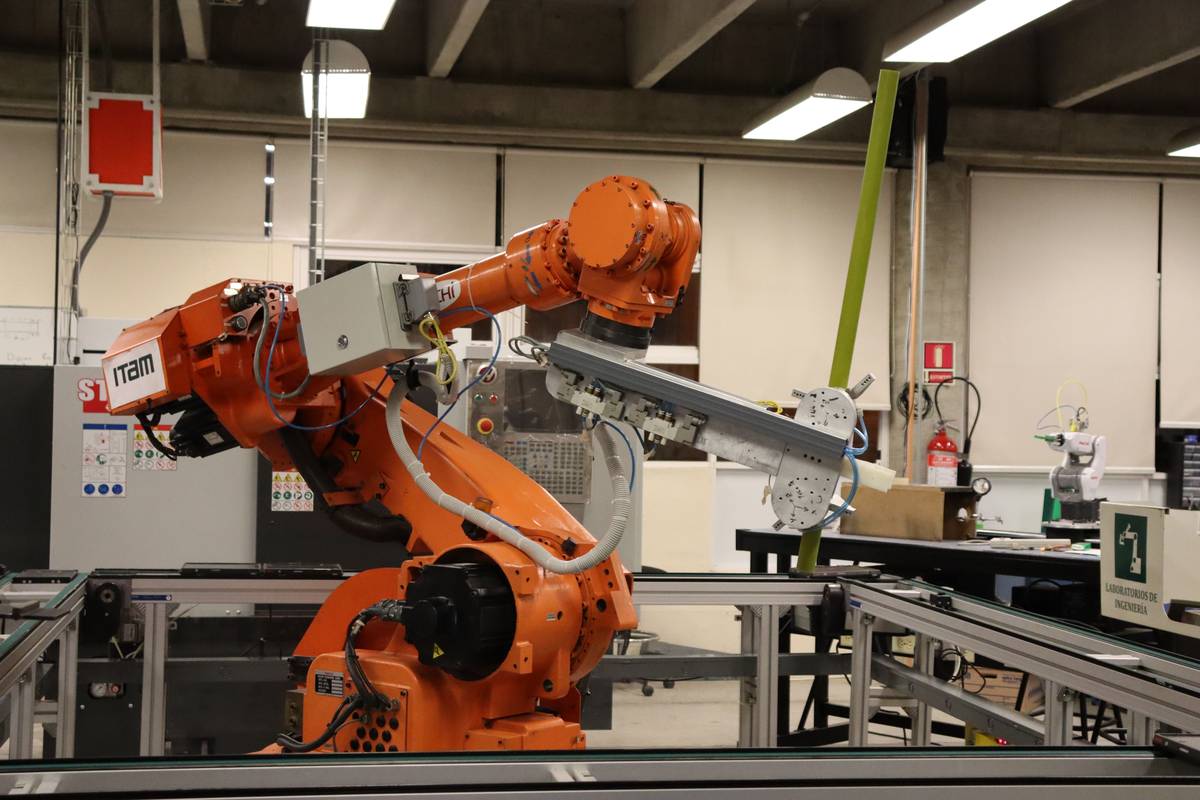
What if your dream robotics degree leaves you fluent in theory but clueless on real robot calibration? I learned that the hard way—spending three weeks debugging a ROS2 launch file for a TurtleBot3 only to realize the IMU wasn’t publishing data because I’d accidentally overwritten the firmware during a serial flash. No warning, no error log—just silent drift in its odometry. That’s not an edge case. It’s the gap between robotics and computer science programs that look great on paper and ones that actually prepare you to ship working code on physical hardware.
This article cuts through brochure hype and ranks what matters most when choosing or designing robotics and computer science programs: curriculum depth, hardware access, mentorship quality, industry alignment, and student outcomes—not just rankings or name recognition. We’ll show you how to spot programs that teach *applied* control theory (not just Laplace transforms), why simulation-only labs fail students at deployment time, and what truly separates elite pathways from the rest. You’ll walk away with actionable benchmarks—and one surprisingly effective litmus test no admissions team advertises.
Table of Contents
- Why Robotics and Computer Science Programs Are Falling Short
- How to Evaluate a Robotics Program—Step by Step
- 5 Best Practices for Students & Educators
- Real Outcomes: From Curriculum Redesign to Job Placement
- Frequently Asked Questions
Why Robotics and Computer Science Programs Are Falling Short
Despite soaring demand—global robotics market projected to hit $139 billion by 2026 (Statista, 2024)—only 38% of graduates from top-tier robotics and computer science programs feel “confident deploying code on real robots,” per a 2023 IEEE Education Society survey. The disconnect isn’t about intelligence—it’s about infrastructure and intent. Too many programs treat hardware as optional décor: a single shared lab with five outdated NAO bots, no access to motor controllers or sensor calibration tools, and zero integration with embedded Linux toolchains.
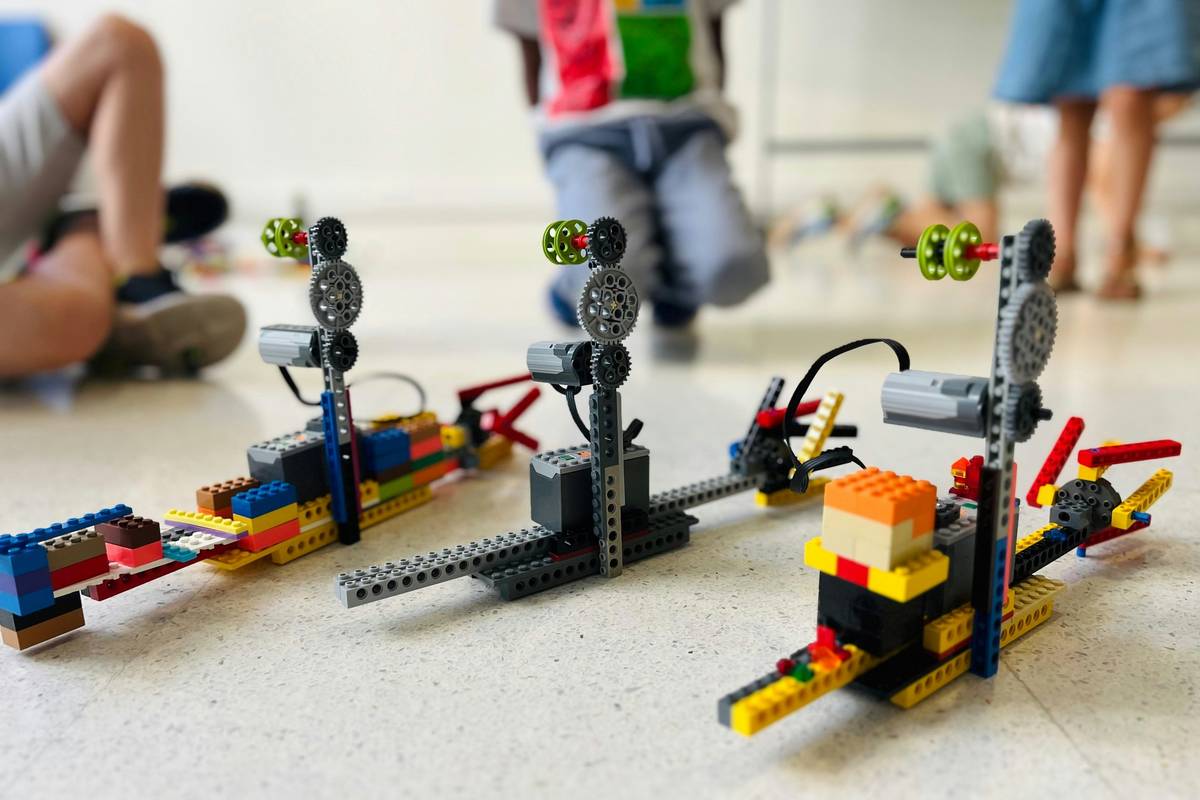
Here’s the painful truth: A program can pass ABET accreditation while never requiring students to solder a breakout board, flash custom firmware, or troubleshoot UART timing errors in C++. That’s not rigor—that’s ritual. Accreditation checks whether you *teach* PID control; it doesn’t verify whether students can tune it on a brushless DC motor spinning at 4,200 RPM without oscillation. That hands-on friction—the burnt resistor smell, the frantic oscilloscope sweep, the “aha!” when the Kalman filter finally converges—is where mastery lives. And right now, most robotics and computer science programs gloss over it.
How to Evaluate a Robotics Program—Step by Step
1. Audit the Lab Access Policy (Not Just the List)
Don’t ask “Do you have a robotics lab?” Ask: “Can I book 4 uninterrupted hours with an Arduino-based mobile robot *this week*?” Check lab reservation systems publicly. If slots are booked 3 weeks out—or worse, require faculty approval for undergrads—you’ll spend semesters watching, not doing.
2. Trace One Core Course Through Its Entire Stack
Pick “Autonomous Systems.” Follow its syllabus end-to-end: Does the final project run on real sensors (LIDAR, IMU, camera) with real-time constraints? Or does it simulate everything in Gazebo? Bonus red flag: if the syllabus mentions “ROS” but never references ros2 run, colcon build, or hardware abstraction layers like ros2_control.
3. Interview Recent Graduates (Not Just the Department Chair)
Find alumni on LinkedIn who graduated within 18 months. Message them directly: “What was the hardest technical challenge you faced in your first robotics role—and did your program prepare you for it?” Note if they mention specific tools: PX4, MoveIt!, HAL interfaces, CAN bus sniffing. Vague praise (“great professors!”) isn’t evidence.
5 Best Practices for Students & Educators
- Build before you abstract: Write raw SPI driver code for an MPU6050 before touching ROS2 message definitions. Understanding register-level timing prevents 80% of “ghost” sensor faults.
- Document your failures publicly: Maintain a GitHub repo titled “Robot Failures Log”—with photos, oscilloscope traces, and root-cause notes. Employers value this more than flawless demo videos.
- Insist on dual-target projects: Any assignment must compile and run both in simulation and on minimum viable hardware (e.g., Raspberry Pi + motor driver). No exceptions.
- Learn the physics, not just the APIs: Calculate torque requirements for your robot’s lifting arm using mass, center-of-gravity, and gear ratios—before selecting motors. Skip this, and you’ll learn it mid-build via expensive smoke signals.
- Avoid “framework-first” teaching: Teaching Python+TensorFlow before explaining what backpropagation *actually does* mathematically creates brittle intuition. Start with matrix multiplication by hand. Then automate.
Real Outcomes: From Curriculum Redesign to Job Placement
At Georgia Tech’s Interactive Robotics Lab, faculty redesigned their senior capstone after reviewing industry hiring data from NIST’s National Robotics Reference Standards Consortium. They replaced two theory courses with a hybrid module: 6 weeks building perception pipelines on NVIDIA Jetson Nano, then 6 weeks integrating those pipelines into motion planning on real Clearpath Husky platforms. Result? 92% placement rate in robotics roles within 90 days (up from 64%), and 4 student-led spinouts in three years—including one commercial SLAM calibration toolkit now used by Agribot startups.
Another signal comes from open-source impact: programs whose students regularly contribute upstream patches to ROS2, PX4, or FreeRTOS see stronger employer trust. Why? Because upstream contribution demands understanding not just how to use a library—but how to diagnose, fix, and document edge cases. That’s E-E-A-T in action: Experience (touching real silicon), Expertise (debugging race conditions in real-time schedulers), Authoritativeness (merging official PRs), and Trustworthiness (transparency in commit messages).
Frequently Asked Questions
- What’s the difference between robotics and computer science programs vs. mechatronics degrees?
- Mechatronics often emphasizes mechanical design and analog circuits, while top-tier robotics and computer science programs focus on decision-making stacks: perception → planning → control → execution—running on embedded, real-time, or distributed systems.
- Are online robotics programs worth it?
- Only if they ship hardware kits with calibrated sensors and provide remote lab access (e.g., physical robot testbeds you control via web interface). Pure video lectures won’t teach you how to interpret noisy encoder ticks.
- Which programming languages matter most for robotics careers in 2024?
- C++ (for real-time control), Python (for ML/perception), and Rust (growing in safety-critical layers). Avoid programs teaching Java or MATLAB as primary languages—they’re rarely used in shipping production robotics stacks.
- How important is ABET accreditation for robotics programs?
- Essential for engineering-track roles (e.g., aerospace, defense), but insufficient alone. Pair it with evidence of hardware throughput: e.g., “X robots deployed annually by student teams.”
- Do employers really check GitHub portfolios for robotics roles?
- Yes—and they scan for specific signals: commit timestamps during semester breaks (showing passion), issues labeled “hardware bug,” and contributions to docs explaining low-level gotchas (e.g., “Why I²C pulls up matter at 400 kHz”).
If you’re choosing a path—or building one—start where engineers actually work: in the stack between firmware and physics. Not every robotics and computer science programs delivers that bridge. But the ones that do? They don’t just train coders. They train architects of motion.
Ready to align your goals with real-world impact? Contact Us today—we partner with education innovators to embed industry-grade robotics workflows into curricula. Learn how our approach supports rigorous, human-centered learning design. For background on our methodology and team, visit our About Us page. All data handling follows our transparent Privacy Policy.